Help Autistic People Communicate Better (Free Boards + Simple Tips)
If communication is hard, everything feels harder, such as learning, play, behaviour, and even mealtimes. The good news? Small tools like a yes/no board, choice cards, and simple modelling can make a big difference, fast.
We’ve included more resources and PDFs (yes/no board, response cards, bumper sticker cards, ask questions) with fresh replacements, plus practical tips to use them.

The “print-and-go”
1) Yes / No Board (choice-making)
Yes and No Board – Teach choice-making and increase communication skills with verbal and nonverbal children. Print multiple copies of the yes/no board. Attach to work surfaces, cafeteria tables, doors, etc. Teaching students to make choices and to respond to yes or no questions is difficult. Begin by teaching it hand over hand, e.g., “Do you want a cookie? Yes?” (touching the student’s hand to the yes symbol), “or no ? ” (touching the student’s hand to the no symbol). If the student indicates in some way that the answer is yes, touch the student’s hand to the yes symbol, say “yes”, and reinforce with the cookie or suitable reinforcer. If the student indicates the answer is no, touch the student’s hand to the no symbol, say “no”, and withhold the cookie. This technique can be used in any setting: “Do you want to go outside? “, “Do you want to stop? “, “Is this red? “, and so forth.”Yes and No” requires lots of practice in many settings, but it’s worth it. Reliable student response to yes and no questions is a milestone skill.
Free yes/no boards you can print from AssistiveWare’s core boards (includes yes/no + useful phrases).
Free yes/no / core-style printable boards and ideas from AAC Community.
If you want PECS-style symbols: free PECS image library at My PECS.
2) “Response Card” + “Bumper Sticker Communication Card” (quick, non-verbal answers)
Response Card and a Bumper Sticker Communication Card. Print this visual prompt and nonverbal response card to increase student choices and responses while they participate in daily classroom activities.
Autism Hub (Queensland) explains response cards and how to keep options simple (great for classrooms).
Twinkl communication cards (yes/no, toilet, help, etc.) are a ready-made set for basic needs.
For “I need a break” cards (super useful for self-advocacy): Positively Autism free PDF.
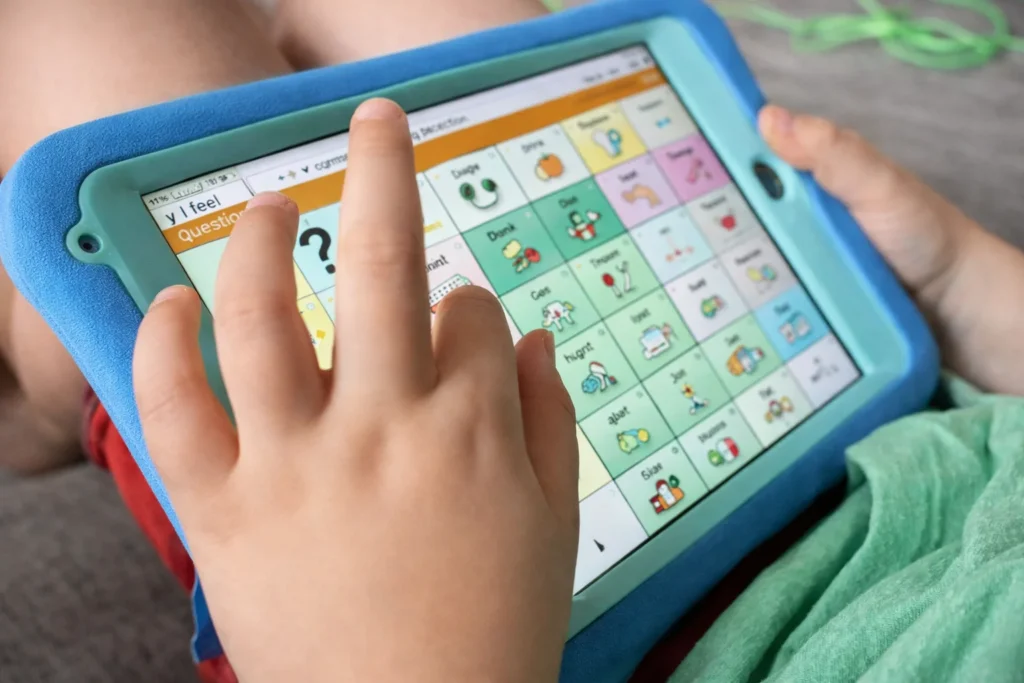
3) “Ask Questions” prompts (helps kids answer + join in)
Ask Questions – This can be good in circle time for verbal students, but they still find it difficult to respond and/or make choices.
Use response cards (up to 4 choices) so the person can answer without speaking.
Add a core board so they can say more than just A/B/C answers. AssistiveWare core boards are a great start.
4) Bigger “communication boards” for daily life
Developmental Disability WA (DDWA) has free downloadable “chat boards” (Aussie-based, practical).
If you want a board that matches common AAC apps/layouts, PRC-Saltillo manual boards are free to download.
LAMP Words for Life manual boards (handy if the device isn’t there yet).
How to make these tools work (in real life)
1) Teach “yes/no” the easy way (without battles)
Start with real choices: “Do you want bubbles?” (something they truly like)
Ask one question, then wait (count to 5 in your head)
If they point/gesture/look, treat that as communication and respond straight away
Mix in “yes” and “no” that are safe (don’t punish “no”, or they’ll stop using it)
A yes/no response is a huge milestone because it unlocks choice, consent, and participation.
2) Model the board (don’t just hand it over)
This is the part most people skip. It matters.
Point to words on the board while you talk (even if the person isn’t using it yet)
This approach is called Aided Language Stimulation (modelling language on AAC).

3) Build a tiny “power set” of words
If you only start with a few cards, make them high-impact:
help, break, more, stop, finished, yes, no
Break cards are a great first step for reducing overwhelm.
4) Make communication available everywhere
Stick boards everywhere. Do the same today:
fridge, bathroom door, desk, car, therapy bag
Even a single-page board helps, especially when stress is high.
5) Use “sing-song” instructions (it really helps some kids)
Rhythm can make instructions easier to follow (and less bossy). Try short lines like:
“Hands to wash… then we splash!”
Use it during cooking, crafts, packing up, anything repetitive.
Your 10-minute starter plan (today)
Print one core board.
Print a yes/no page (or use the yes/no on the core board).
Print break/help cards.
Pick one daily moment to practise: snack time, iPad time, bath time
Model 5 times a day: point + say (no pressure for them to copy)