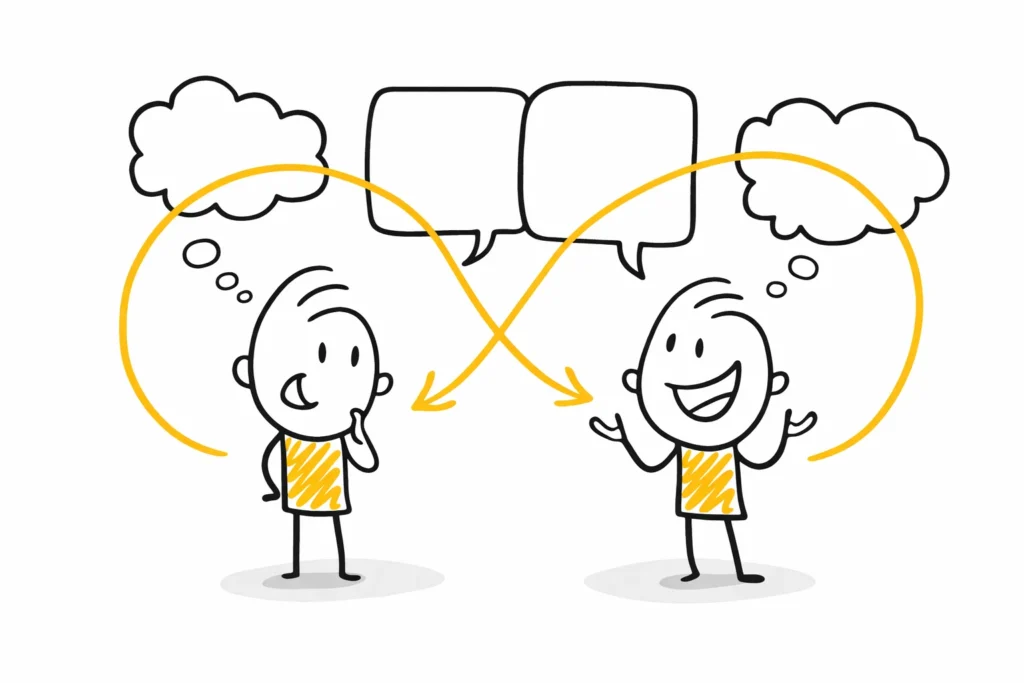
Social Skills Made Easier (With Free Autism-Friendly Tools)
Social skills can feel confusing when the “rules” aren’t clear. One day, a joke lands. The next day, the same joke gets a weird look. That can be stressful for autistic kids, teens, and adults and for the people supporting them.
Here’s the good news: social skills aren’t just “talking more” or “acting normal”. It’s about making communication easier, clearer, and kinder for everyone. Using routines, visuals, scripts, and practice that fit autistic communication styles.
Below is a free, practical toolkit you can use at home, school, therapy, or in the community. It includes:
Conversation starters (for verbal and nonverbal communicators)
Circle-time songs and question games (without pressure)
Personal info practice (name, phone, address, birthday)
Hygiene + puberty supports (deodorant, periods, body changes)
Safety skills (fire safety + routines)
Visual schedules and sequencing cards (step-by-step support)
Everything is written to be easy to use
Conversation Starters (the “ring binder” that works)
How to set it up
Print 10–30 “topic pages” and put them in sheet protectors.
Add a whiteboard marker so answers can be circled/written.
Use a simple routine: Greet → Choose topic → Ask → Answer → One follow-up.
Rotate who “holds the page” so everyone gets a turn to lead.
Make it friendly for nonverbal communicators
Give 2–4 choices (not 20).
Let them point, tap, use AAC, or eye-gaze.
Accept answers like “same as last time” — then model a gentle expansion.
Better topic ideas (swap these in)
Favourite: food / game / place / animal / music
“Right now”: what I want / what I need / what I’m worried about
“About me”: my strengths / my special interests / what helps me
“Friendship”: how I show I like you / how I know you like me
“Repair phrases”: what to say when it gets awkward (see below)
Free, ready-to-print conversation starter resources:
Personal Information Mnemonics – These chants work well for some students in a circle time. Put all the morning activities in a ring binder, which is held up to the students so they can look at the words and pictures as we go along. Start with a written, teacher-modelled, phone number response, etc., that the student can follow. Fade to the student reading the response. Fade the written response and eventually, fade the mnemonic and ask the question more naturally. Telephone Number, Birthday, and Address
OCALI Conversation Starter Cards + blank templates (great for choice-based communication).
Icebreaker / getting-to-know-you cards (printable).
Download these conversation starters:
Put these conversation starters in sheet protectors within a ring binder for small groups or as part of a start-the-day routine. Go through a greetings and calendar script and then use the boards to extend the conversation. Model and rehearse different responses so that students are less likely to become habituated to one response. Pass the book around so students can point if they are nonverbal.
What is your favourite colour?
What is your favourite cartoon?
What is your favourite cereal?
What is your favourite green vegetable?
What is your favourite vegetable?
What is your favourite cookie?
What is your favourite salty snack?
What is your favourite toy or game?
Circle Time Songs (keep the fun, reduce the pressure)
Songs are amazing because they:
build routine
practise turn-taking
help kids learn “scripts” without feeling put on the spot
Try:
“Hello” + “What’s your name?” + “How are you today?”
Add a gesture choice: wave / fist bump / no touch (respect sensory needs)
Download Tommy’s Teeth – An 11-page story to teach teeth brushing, written by Jaen Mayberry and illustrated by Nancy Mayberry.
If you want to add a hygiene routine song, the handwashing timing tip is widely used:
scrub for at least 20 seconds (many people use “Happy Birthday” twice as a timer).
Free handwashing visuals and supports:
Handwashing resource packs + visuals (multiple options).
Printable sequence strips/cards.
Try this hand washing song
Hand-washing song: Download it and print it out. Put it in a sheet protector, and hang it in the bathroom. And wash your hands for the same duration as singing the song.
Try these two songs for the morning circle
Hello Song, which is an old Girl Scout number. If you can’t recall it, just thrash it out any old how, with gusto. We make a meal of it and shake hands with each student for the 2nd verse.
The Name Song is good practice for responding to the age-old question- What’s your name?
“Ask Questions” Game (for kids who freeze)
If a child can talk but struggles to answer, it’s often because the question is too open.
Use the 3-step support ladder:
Choice: “Do you like apples or bananas?”
- Choice: “Do you like apples or bananas?”
- Either/or + reason: “Why apples? Crunchy or sweet?”
- Open: “What fruit do you like?”
Keep it short, then stop, don’t over-question.
Helpful bonus: Supported conversation cards (feelings/rights/choices)
Ask Questions – This can be good in circle time for students who are verbal, but still find it difficult to respond and/or make choices. one and two and three
Personal Information Mnemonics (name, phone, address, birthday)
Your “fade the prompt” approach is spot-on. Here’s a clean structure:
Step 1: Read it
Student reads: “My name is ___.”
Step 2: Fill the blank
“My name is ____.” (only the name missing)
Step 3: First sound cue
“My name is P____.” (then fade that too)
Step 4: Real-life practice
Practise in safe places: ordering food, checking in at reception, calling a family member.
Useful free “about me” style support:
Reframing Autism “About Me” teacher template (downloadable).
A personal information worksheet for a student to fill out after prerequisite weighing and measuring. Use as a first step toward filling in forms.
Personal Information Mnemonics – these chants work well with some students in a circle time. Put all the morning activities in a ring binder folder. Students can hold them up so they can look at the words and pictures along the way. Start with a written, teacher-modelled, phone number response, etc., that the student can follow. Fade to the student reading the response. Fade the written response and eventually, fade the mnemonic and ask the question more naturally. Try Telephone Number, Birthday, and Address. Here is an original Name jingle. Kids love these!
Hygiene, Deodorant, and Puberty (calm, clear, no shame)
These topics can be stressful. The goal is confidence and safety, not embarrassment.
Free puberty + period supports:
National Autistic Society: guidance for parents/carers on sex education topics.
Planet Puberty social story PDF on using a pad (excellent, step-by-step).
Free printable period social story.
Round-up of free puberty social stories (periods, body odour, more).
Aussie teen hygiene guide (body odour, dental care, routines).
Free general hygiene visuals:
Daily hygiene resources + visual checklists.
Personal hygiene life skills PDF (includes social story + activities).
Use this Deodorant story to improve a student’s personal hygiene.
Use both page 1 and page 2 to help kids understand the menstruation process. Use this story or create something similar to help reduce stress and improve a student’s personal hygiene. Be sure to check with parents and the school policy for permission. Get them to read this before going to the bathroom, take it with them and get them to review the pictures as they proceed through the process.
Safety Skills (Fire Safety + routine practice)
Fire safety is perfect for:
sequencing
role-play
visuals on the wall
Free resources:
Do2Learn Fire Safety Song (plus printable picture cards for each verse).
Visual Sequences and Symbols (for clearer understanding)
Visuals reduce anxiety and make routines easier.
Free daily routine sequencing printable (simple and effective).
Free visual schedule templates (daily schedule, first-then board, etc.).
Symbol support overview (Widgit/SymbolWorld background and symbol use ideas).
“Object by Function” speech practice (verbal students)
Great for functional language and WH-questions.
Download and print this Object by function Speech Exercise for verbal students.
Free options:
Autism Helper free function worksheets (multiple levels).
Object function question list (easy practice prompts).
A small “social repair” cheat sheet
These phrases help someone stay safe and confident when social stuff goes sideways:
- “Can you say that again?”
- “I need a break.”
- “I’m not sure what you mean.”
- “Can you show me?”
- “I like talking about ___.”
- “I’m done talking now.”
- “Is this a good time to talk?”
- “That was a joke / That wasn’t a joke.”
This is the stuff that prevents meltdowns, shutdowns, and awkward spirals, because it gives the person a script for what to do next.